Ear Piercing Placement & Styling Guide
Not sure whether a stacked lobe, helix, conch or tragus will suit your ear? This straight-talking guide explains what each placement is, how to plan a balanced look and what to expect when you visit The Viper Pit in Irlam.
Every ear is different. We check your anatomy in person, talk through your lifestyle and healing, then help you choose a sensible plan — without pushing you into more piercings than you want.
Ear piercing map: what goes where
The names can sound complicated, but the basic map is simple. Your piercer will mark the exact position before anything happens, so you can see how it looks and ask questions.
Lobe & stacked lobe
The soft lower part of the ear. A single lobe is the classic starting point; a stacked lobe adds a second or third placement above or between existing holes to create a more individual layout.
Helix & forward helix
A helix sits on the outer upper rim. A forward helix is toward the front of that rim, close to where the ear meets the head. The available space and angle depend on your anatomy.
Flat
The flatter cartilage area inside the upper rim. It can work well as a focal point for a decorative stud, provided your ear has suitable room for the jewellery and healing.
Tragus
The small piece of cartilage in front of the ear canal. It is a neat, subtle placement, but the piercer needs to check that the tissue is suitable and discuss earbud use while it heals.
Conch
The central bowl of the ear. A stud is commonly chosen for an initial conch piercing; once fully healed, some people later change to a ring if their anatomy and jewellery sizing allow it.
Rook & daith
These sit in inner cartilage folds. Not every ear has the right shape for either placement, so an in-person anatomy check matters. We will suggest an alternative if your first choice is not suitable.
What can be pierced in one appointment?
There is no useful one-size-fits-all answer. A sensible plan depends on the placements, which side you sleep on, work or sport, previous healing and how confidently you can manage aftercare.
Sometimes two carefully chosen placements make sense together. Sometimes it is better to start with one, let it settle and add to the look later. We will explain the trade-offs and recommend a plan your ear can realistically heal.
Good styling is not about filling every space. It is about proportion, spacing and choosing jewellery that works with your ear.
Jewellery choices
Your initial jewellery should support healing first and styling second. The best size and shape depends on the placement, swelling room and your anatomy.
Stud or hoop?
A hoop is not automatically suitable for a fresh piercing. For many placements, a correctly fitted stud or flat-back style gives the area a calmer start. Your piercer will explain what is appropriate now and what you may be able to change to after healing.
Materials and finish
We offer quality titanium and gold options, with availability changing as new pieces arrive. Bring a photo of the look you like, or ask us to help build a combination around your budget and existing piercings.
Ask in studio to see the current jewellery selection. Stock and suitable sizing vary by placement.
Your piercing plan: four simple steps
1. Choose
Show us your ideas and tell us what you want the finished ear to feel like — subtle, balanced or a stronger statement.
2. Check
We assess your anatomy, existing piercings and practical factors such as sleeping, headphones, work and sport.
3. Pierce
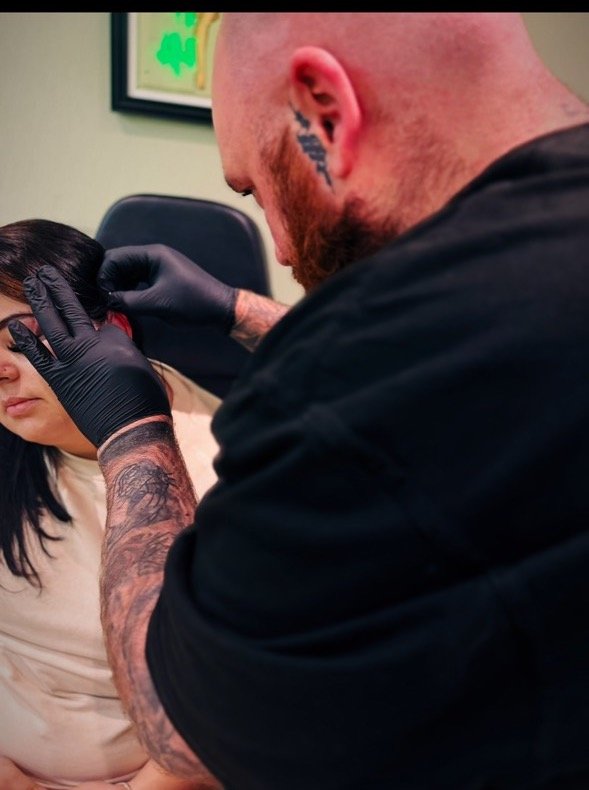
We mark the position for your approval and pierce with a sterile, single-use needle — never a piercing gun.
4. Support
You leave with clear aftercare advice. Contact the studio for a healing check or downsizing guidance where recommended.
Aftercare, check-ups and downsizing
Good aftercare is simple: keep the area clean, avoid unnecessary touching and do not change the jewellery too early. Cartilage piercings can take time, so a quiet week does not always mean the piercing has finished healing.
If jewellery needs downsizing after swelling settles, or something does not feel right, contact us before trying to fix it yourself. We can advise whether you need a studio check.
Plan your visit
The Viper Pit Tattoo & Piercing Studio
84 Liverpool Road
Irlam, Salford
M44 6FN
We are convenient for Irlam, Cadishead, Eccles, Salford, Trafford and the wider Greater Manchester area. Walk-ins are welcome subject to availability; booking is the best way to plan your time and discuss a particular placement.
Baby and children’s ear piercing
Little Viper offers calm, needle-only ear piercing for babies from 4 months and for children. The appointment is handled differently from an adult styling session, with age-specific preparation and aftercare.
Ear piercing questions
Can every ear have every placement?
No. Cartilage folds, space and angles differ from person to person. We check your anatomy and suggest the closest safe alternative if a placement is not suitable.
Can I choose a hoop straight away?
It depends on the placement, jewellery size and healing needs. A stud is often the calmer initial option. Your piercer will explain what is appropriate for your ear.
Do you use piercing guns?
No. The Viper Pit uses sterile, single-use needles for piercing.
Do I need an appointment?
Walk-ins are subject to availability. Booking is recommended if you want a particular time, multiple placements or help planning an ear stack.
Do you pierce babies and children?
Yes. Little Viper provides needle-only ear piercing for babies from 4 months and for children. Please read the dedicated Little Viper page before booking.
Ready to plan your ear?
Bring your ideas. We will help you turn them into a placement and jewellery plan that suits your anatomy, your day-to-day life and your budget.